NEWS
Beyond ₦2 Billion: How Remi Tinubu’s Akwete Declaration Could Transform Women’s Economic Inclusion and Nigeria’s Cultural Economy
Examining the First Lady’s Akwete Declaration Amid the Imperative of Women’s Economic Inclusivity

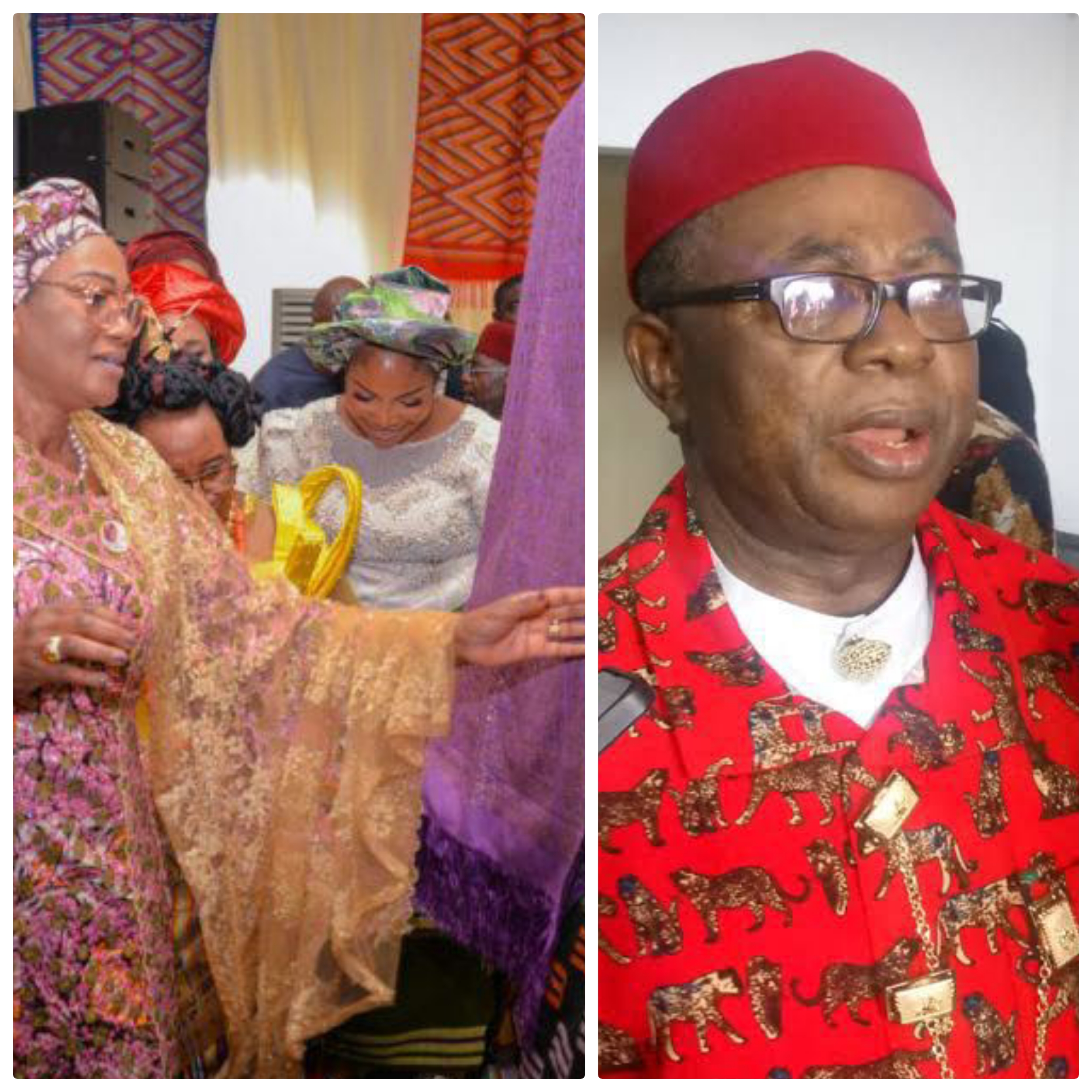
By Rt. Hon. Sam Onuigbo
President, GLOBE Legislators International; Former Member, House of Representatives
The recent visit of Nigeria’s First Lady, Senator Oluremi Tinubu, CON, to Abia State has become more than a ceremonial engagement. It has provided a significant boost to rural women in the state while placing the centuries-old Akwete weaving tradition firmly on the national stage.
Her visit has also generated unprecedented public attention for the Akwete weaving community and rekindled conversations around the economic potential of indigenous industries driven by women.
The Rich Heritage of Akwete
Akwete cloth traces its roots to the historic town of Akwete in Ndoki, Ukwa East Local Government Area of Abia State. Historical records credit the legendary 19th-century master weaver, Dada Nwakata, with revolutionising the traditional handwoven textile, although women in the community had mastered the craft as far back as the eighteenth century.
Over the years, Akwete has remained one of Nigeria’s finest indigenous fabrics, representing creativity, resilience and cultural identity.
The ₦2 Billion Commitment
Perhaps the most striking moment during the First Lady’s visit was her announcement:
“On my own, I told the Governor that I’m donating ₦2 billion to the project. I don’t know how you want to use it. The fund is easy for me to give to you and I believe that the fund will be in good hands.”
This remarkable financial commitment demonstrates her determination to reposition the Akwete weaving industry as a catalyst for women’s empowerment.
Access to finance has long remained one of the greatest obstacles preventing women entrepreneurs from fully realising their potential in business, manufacturing and politics. By committing ₦2 billion, the First Lady has provided a rare opportunity to scale the industry and improve the livelihoods of hundreds of women.
Beyond financial support, however, her intervention should inspire the weaving community to embrace innovation. In today’s world of technology and Artificial Intelligence (AI), Akwete producers can explore digital design tools, improve loom efficiency and modernise production processes while preserving the authenticity of the craft.
Having lived and worked in the area before the creation of Ukwa East and Ukwa West Local Government Areas, I can personally attest to the ingenuity, creativity and dedication of these remarkable women.
A Tool for Cultural Diplomacy
The First Lady’s remarks extended beyond economics.
She observed:
“There is nowhere I stand in the world… I wear African wears. We should not let our children forget that.”
Within those words lies a profound message.
Akwete possesses enormous potential to become one of Nigeria’s strongest cultural exports, alongside Aso-Oke, Adire and other indigenous textiles.
Her visit has challenged the Akwete weaving community—and indeed the entire South-East—to emulate the remarkable success recorded by Yoruba traditional fabrics, which have evolved from local attire into internationally recognised symbols of Nigerian culture.
Economic Inclusion Through Indigenous Skills
The First Lady’s declaration also reinforces an important truth: women possess enormous capacity to drive national economic transformation through indigenous skills.
Her promise to wear Akwete as buba and wrapper sends a powerful marketing message that extends far beyond fashion.
It signals confidence in the product while encouraging wider patronage across Nigeria and internationally.
Her description of Akwete as “a very soft breathable cotton” was, in effect, a subtle but effective endorsement capable of opening new markets and attracting global attention.
Preserving a Sacred Heritage
One of the most significant aspects of the First Lady’s visit was her emphasis on preserving the authenticity of Akwete weaving.
She noted that the craft is handed down from one generation to another and carries deep spiritual and cultural significance.
She urged that this sacred heritage should never be diluted in the pursuit of commercial expansion.
At the same time, she encouraged innovation by suggesting new applications for Akwete, including:
Fashion accessories
Head ties (gele)
Home décor
Bedspreads
Modern interior designs
Such diversification could significantly expand the market for Akwete beyond traditional wrappers.
A Call to the Entire Igbo Nation
The First Lady’s appeal was not directed solely at the women of Akwete.
Rather, it was a challenge to all sons and daughters of Igboland to preserve, promote and commercialise one of their greatest cultural assets.
She reminded Nigerians that while Aso-Oke has become a national fashion staple, Akwete equally deserves a place on the national and international stage.
Building on Existing Foundations
Encouragingly, efforts to preserve and expand Akwete weaving had already begun before the First Lady’s visit.
Former Vice Chancellor of Alex Ekwueme Federal University, Ndufu-Alike (AE-FUNAI), Professor Chinedu Nwajiuba, established the Centre for Indigenous Clothing, focusing primarily on Akwete weaving.
The centre provides year-long training programmes, promotes cultural pride and encourages students to wear Akwete during the institution’s “Traditional Dress Mondays.”
These initiatives provide a solid foundation upon which the First Lady’s intervention can build.
Keeping the Momentum Alive
The challenge now is sustaining the enthusiasm generated by the visit.
The wives of South-East governors, together with stakeholders across the region, should seize this momentum by integrating Akwete promotion into programmes such as the annual August Meeting.
Such platforms offer opportunities to explore cottage industries, women’s entrepreneurship and indigenous skills capable of driving inclusive economic development.
Leadership That Mobilises
Senator Oluremi Tinubu has consistently demonstrated her commitment to women’s development.
During our time in the National Assembly, while I chaired the House Committee on Climate Change and she chaired the Senate Committee on Environment, she consistently displayed visionary leadership at both national and international engagements, including the annual United Nations Climate Change Conferences (COP).
Her years as First Lady of Lagos State equally reflected this commitment through the Committee of Wives of Lagos State Officials (COWLSO), which empowered women, encouraged collaboration and promoted community development.
Conclusion
The First Lady’s visit to Abia State represents far more than the announcement of a ₦2 billion donation.
It is a strategic call to preserve Nigeria’s cultural heritage, strengthen women’s economic participation, modernise indigenous industries and position Akwete as a globally recognised symbol of Igbo creativity.
Senator Oluremi Tinubu has once again demonstrated that ideas, vision and purposeful leadership can inspire transformation.
The task now rests with the people of Abia State, the wider South-East and indeed all Nigerians to ensure that this renewed momentum translates into lasting economic prosperity and cultural pride.
Rt. Hon. Sam Onuigbo is the President of GLOBE Legislators International and a former Member of the House of Representatives. He writes from Abuja.









Beyond ₦2 Billion: How Remi Tinubu’s Akwete Declaration Could Transform Women’s Economic Inclusion and Nigeria’s Cultural Economy

‘I Won’t Be Greedy; Abia Deserves More’ — Eric Opah Accepts Umuahia Political Forum’s 2027 Endorsement

Governor Otti Backs Proposed $13.1M CNG Mother Station Project in Abia

Governor Otti Inaugurates Board Of Abia State Electricity Regulatory Authority , Vows To Pull Umuahia Out Of National Grid

Tacha most nominated housemate in history of BBNaija ― Cross
