NEWS
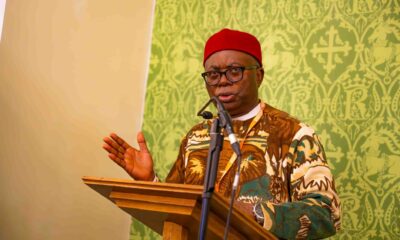
Examining First Lady’s Akwete declaration amid issues of women economic inclusivity

By Rt Hon. Sam Onuigbo
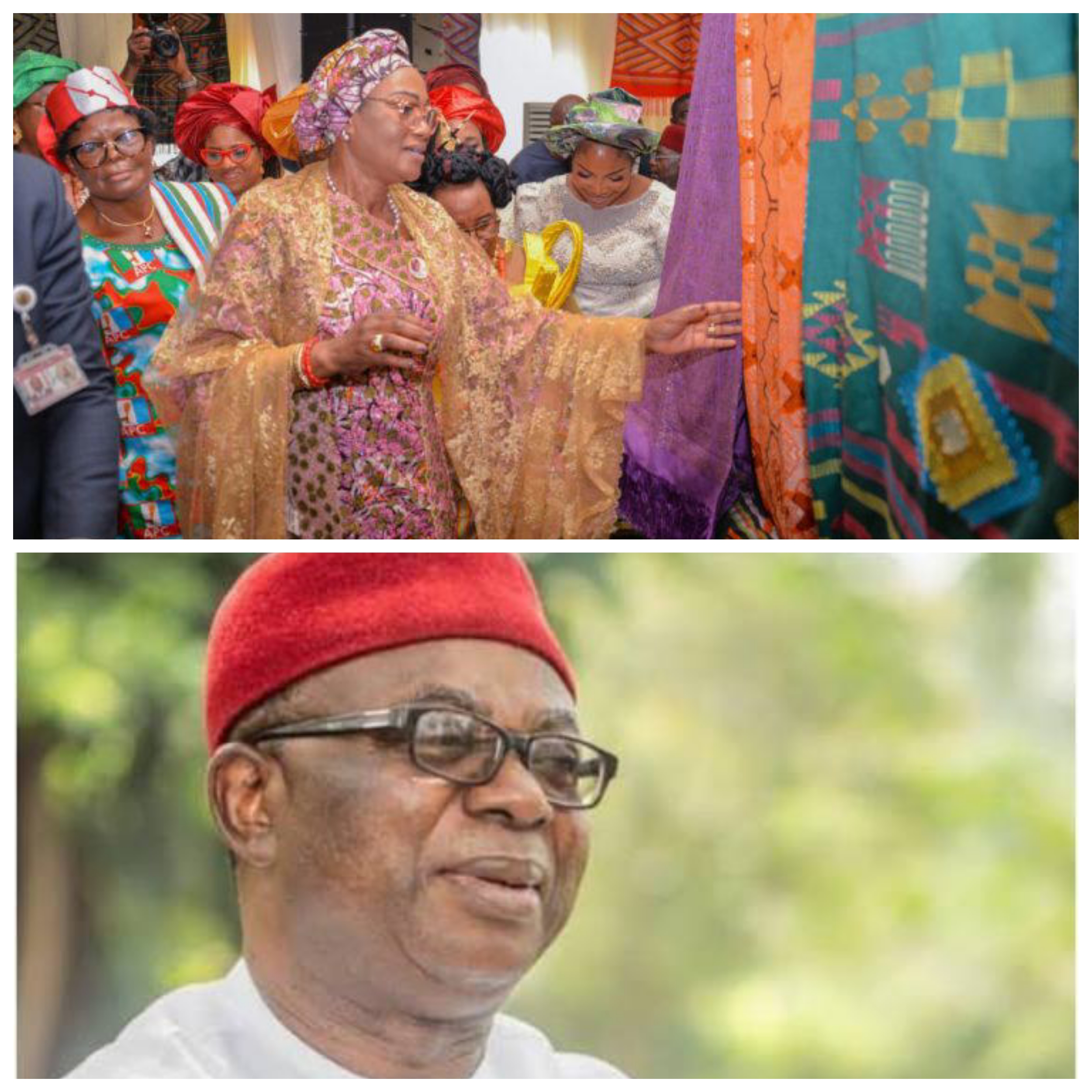
The recent visit by the wife of the President, Senator Oluremi Tinubu CON, to Abia State, has turned out to be a huge lift for rural Abia women and unparalleled positive public relations for the Akwete weaving community.
It could be recalled that Dada Nwakata, a legendary 19th century master-weaver, credited with founding and revolutionising the traditional hand-woven Akwete cloth produced in Igboland, precisely at Akwete, Ndoki, Ukwa East Local Government Area of Abia State. History has it that women from the locality became adept at the creation of the Akwete cloth from the period dating back to the eighteenth century.
N2billion and More:
“On my own, I told the Governor, that I’m donating N2billion to the project. I don’t know how you want to use it. The fund is easy for me to give to you and I believe that that fund will be in good hands.”
By donating the sum of N2billion, the First Lady demonstrated her resolve to scaleup the Akwete cloth weaving industry. As a moving force for women empowerment, the visionary First Lady knows too well that funding has always been a major hurdle that restrains women from maximizing their potentials, be it in politics, trade or industry.
But, beyond the financial lift, the First Lady must have decided to challenge the women to up their craft, particularly in this age of technology and Artificial Intelligence (AI). With the generous financial impetus, the Akwete weavers have been motivated to explore how to integrate AI in the areas of design and loom efficiency and enhance their productivity.
As one who lived and worked in the area, before it was subdivided into Ukwa East and Ukwa West, I would attest to the ingenuity and creativity of these women involved in the handcrafted Akwete cloth.
Cultural Diplomacy
The First Lady was not only making a speech when she observed as follows: “There is nowhere I stand in the world, even the white person is always in awe of my personality. You saw when we went to the palace, we’ve been to places and I wear African wears. We should not let our children forget that.”
Because, encapsulated in that great remark is the potential of Akwete to augment Nigeria’s cultural diplomacy, following the Aso-oke/Adire and danciki ensemble. Through her visit and cross fertilization of ideas, the First Lady inadvertently challenged Igbo women, particularly the Akwete cloth weavers to emulate their counterparts in Ogun State and other parts of the South West, who have raised Aso-oke/Adire attire into, not only as a symbol of cultural identity, but also attaining global acclaim.
Gender Inclusivity
One inescapable point that a quiet reflection on the First Lady’s Akwete proclamation threw up is the fact that with creative skills, women inclusivity in national economic reformation becomes a given. What Senator Oluremi Tinubu was doing by reminding the Akwete women that she plans to be wearing Akwete as buba and wrapper, is to open their minds to the enormous economic opportunity that their craft holds for the nation’s economic diversification efforts, as well as, foreign exchange inflow.
As a widely travelled and elegant personality, the First Lady was also doing a bit of soft marketing when she described Akwete as “a very soft breathable cotton”. The President’s wife was intoning the feasibility of the cloth for foreign patronage and global significance.
Sustaining the Momentum
Here is a very important aspect of the First lady’s message: “I will give a little advice to the governor about these women; why they hold their craft dear. It is a spiritual thing for them and one of the good things I saw, was, I saw young people in their family doing exact thing.
“So, it is a craft transferred from generation to generation. And, when we bring people who don’t do that and things are done like that, it becomes a sacred craft- sacred craft done with love, patience, endurance. It’s something spiritual and that should not be desecrated. We have to keep that.
“For me, I don’t know about the women of Akwete, I heard your cry. I am here to announce to all Nigerians and the Igbos should take Akwete to the nation. I told her (Mrs. Priscilla Otti), you all wear tie and dye from Yoruba land. You wear Aso-Oke: why not us wearing Akwete, it is a beautiful fabric.
“And those are the things that they have to modernize. They will make Akwete into our kpele and gele, so it won’t be the big wrapper. Akwete can be made into something like bedspread. So, what they could do with it we can’t really quantify, but for me and for all the notable sons of Igbo land, it is not only Abia State; rise up to the occasion to preserve Akwete.”
The above statement came as a take-home assignment to, not only the Akwete weavers in Akwete and the people of Abia State, but also to the entire Igbo nationality. Her Excellency, the First Lady reminded her colleagues at the subnational level that Nigeria’s unity in diversity should be upheld even through fashion, noting that instead of every lady turning out in Aso-oke, Akwete should also complement the national spread.
Interestingly, something in the direction of expanding the horizon for Akwete had already been started. For instance, record shows that the former Vice Chancellor of Alex Ekwueme Federal University, Ndufu Alike, (AEFUNAI), Professor Chinedu Nwajiuba, established a Centre for Indigenous Clothing, located at the institution.
The centre focused on Akwete weaving and encouraging the cultural pride of the Akwete people, as well as, teaching an Akwete weaving course, which covers a year’s worth of training. The university also encourages students to wear Akwete cloth on “Traditional Dress Mondays,” even as it gifts samples of the cloths produced at the centre to important visitors.
But, after the First lady’s visit, the challenge to the wives of South East governors is how to ensure that the new momentum and national exposure given to the Akwete cloth does not go cold. And, remembering that the annual Igbo women’s month is around the corner, the women should explore the possibility of reexamining the impact of Akwete Cloth weavers in waking up other strategies for incubating cottage industries and other handcrafts or skills, during this year’s August Meeting.
The Nigeria’s First Lady has truly shown herself as an ideas-person and a grand mobiliser of women. I recall that back then in the National Assembly, when I chaired the House Committee on Climate Change and she served as Chair of the Senate Committee on Environment, she always demonstrated great leadership vision in Nigeria and during the Conference of the Parties (COPs) organized annually by the United Nations Framework Convention on Climate Change (UNFCCC), by waking up the giants within people, thereby displaying that inborn trait of involving others, and achieving results.
Many also remember how as the First Lady of Lagos State, she mobilized women in the State of Excellence through COWLSO (Committee of Wives of Lagos State Officials). With COWLSO, the First Lady provided a unique platform for women to get involved, share ideas, register challenges, proffer solutions and form a common bond of community and shared values.
There is, indeed, a reason why Senator Chief (Mrs) Oluremi Tinubu, is the First Lady of the Federal Republic of Nigeria, at this point in the history of the country’s march to real prosperity and sustainable national development. Nigerian women, particularly Igbo women, should now heed this clarion call and follow their leader.
*Onuigbo, President of GLOBE Legislators International and former MHR, writes from Abuja









Examining First Lady’s Akwete declaration amid issues of women economic inclusivity

Beyond ₦2 Billion: How Remi Tinubu’s Akwete Declaration Could Transform Women’s Economic Inclusion and Nigeria’s Cultural Economy

‘I Won’t Be Greedy; Abia Deserves More’ — Eric Opah Accepts Umuahia Political Forum’s 2027 Endorsement

Governor Otti Inaugurates Board Of Abia State Electricity Regulatory Authority , Vows To Pull Umuahia Out Of National Grid

Tacha most nominated housemate in history of BBNaija ― Cross
