HEALTH
Significant progress is being made toward curing sickle cell, hepatitis B, and HIV/AIDS using biotechnology – BSN

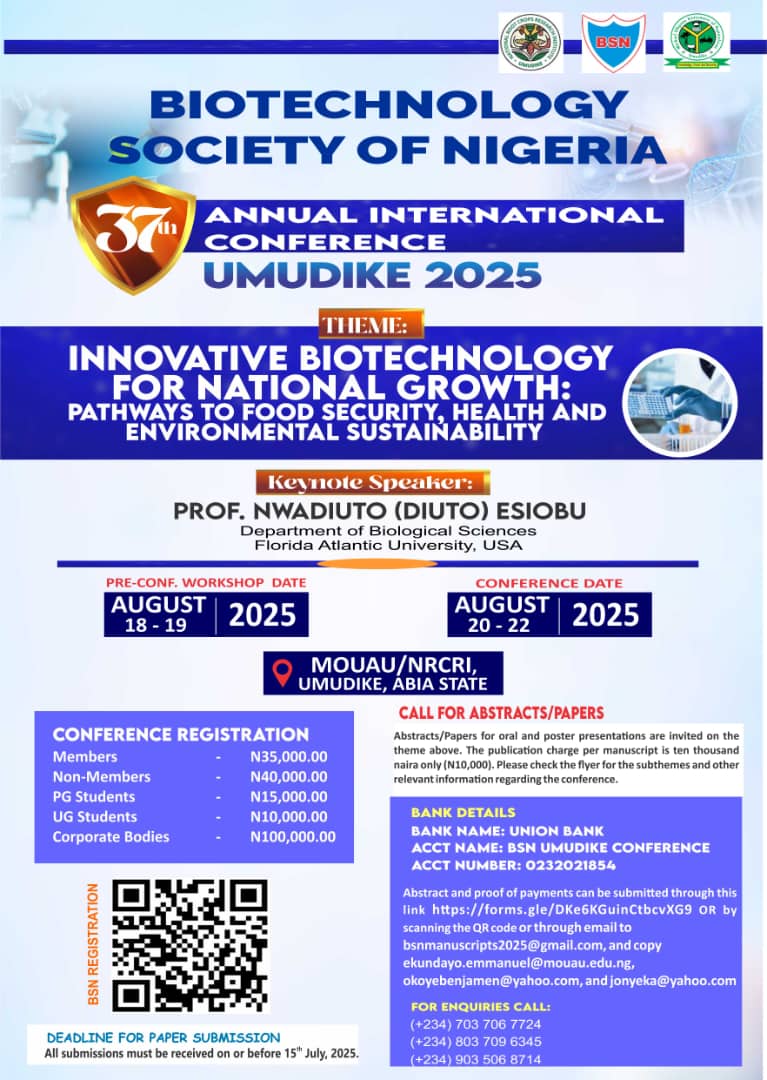
The advocacy for the safe application of biotechnology techniques to achieve advanced healthcare, sustainable food security, and environmental safety has been described as a project worth every concentration and focus.
This was disclosed by the National President of the Biotechnology Society of Nigeria, Sylvia Uzuochkwu, at the opening of the 37th Annual International Conference of BSN in Umudike, Abia State, themed “Innovative Biotechnology for National Growth: Pathways to Food Security, Health and Environmental Sustainability.”
Uzuochkwu who stated that significant progress is being made toward curing diseases encoded in human DNA, including sickle cell, hepatitis B, and HIV/AIDS, referred to the global benefits of mRNA vaccines, which helped curb the COVID-19 pandemic, as a testament to biotechnology research.

She emphasized on the significance of the conference to which she says revolves around the use of modern biotechnology to improve healthcare, food security and environmental safety.
AUDIO 1
In agriculture, Uzuochkwu revealed that innovations like Bt cowpea is set to enhance Nigerian crops by reducing pesticide use, boosting yields, and improving international market acceptance, this she says will improve consumer safety as well as put more money in the pockets of local farmers.
AUDIO 2
Speaking at the event, Executive Director/CEO of the National Root Crops Research Institute (NRCRI), Umudike, Chiedozie Egesi, noted that the institute for a century has stood at the forefront of agricultural research, applying biotechnology to solve real problems which includes improving cassava’s disease resistance and enhancing yam and sweet potato varieties for better nutrition.

He maintained that the NRCRI is turning science into solutions that matter for farmers, markets, and households as the institute has pioneered the development and release of over 50 improved cassava varieties, 30 yam varieties, 10 potato varieties, four sweet potato varieties, and two ginger varieties, each designed for higher yield, resilience, and adaptability.

The keynote speaker Nwadiuto Esiobu, a Professor of Microbiology and Biotechnology while delivering her address, stressed that with the recent foreign aids cut, high disease burden amongst others, it has become necessary for the nation to look inwards to innovate with the help of biotechnology.
AUDIO 3


Governor Otti: Abia Is Transitioning From Conventional To Digital Commerce, Charges Ndigbo To Embrace Technology For Development

UGWUEKE Declaration: Abia North Stakeholders Meet Again, Back Continuity Of Otti’s Good Governance Brand Beyond 2031

2027: APGA’s Irukwu Onwuka Challenges Orji Kalu, Other Contenders, Says Abia North Needs New Generation of Leadership

Governor Otti Inaugurates Board Of Abia State Electricity Regulatory Authority , Vows To Pull Umuahia Out Of National Grid

Tacha most nominated housemate in history of BBNaija ― Cross
